Build A Girlfriend
- 4.1
- Rating
- 10.00M
- Installs
- Free
- Price

 Analysis by App-foxy
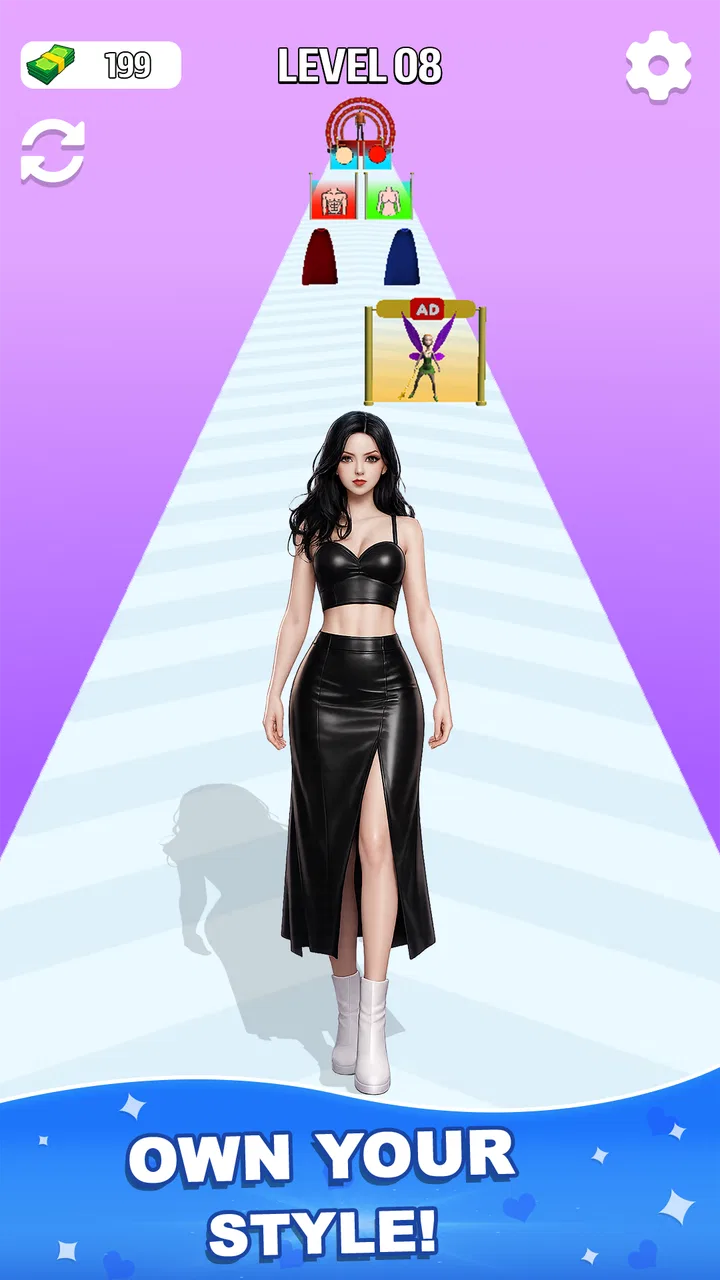
I spent time with Build A Girlfriend to see whether its fashion-focused idea has enough depth to hold attention beyond the first few styling sessions. At its core, this is a casual game from Play Strong where the goal is to create a girlfriend character and shape her appearance through fashion choices. That premise is easy to understand, quick to start, and clearly aimed at players who enjoy visual customization more than complicated rules.
My first impression was that the game works best as a short, low-pressure creative break. You can approach it without learning a large set of systems, and the appeal comes from deciding how your character should look rather than mastering difficult controls. If you like dress-up games, character makeovers, and simple visual progression, the concept is immediately approachable. If you want a story-heavy dating game, deep relationship choices, or a demanding strategy experience, the title points in a very different direction.
What the fashion loop feels like in everyday play
The central appeal is the act of building a look one choice at a time. I found that the most enjoyable sessions were not necessarily the longest ones. I would open the game with a particular idea in mind, experiment with an outfit or overall style, and then stop once the character looked close to what I wanted. That makes it a comfortable option for a quick break rather than a game that demands a long uninterrupted sitting.
You May Also Like

 Blood Strike: 2.5 Anniversary
Blood Strike’s Loadouts Turn Every Drop Into a Tactical Gamble
A close look at Blood Strike’s custom loadouts: how fast access to signature weapons reshapes its battle royale rhythm, rewards preparation, and narrows the gap between fights.

 Pandora - Music & Podcasts
Pandora’s Music Is Easy to Start, but Harder to Recover
Pandora’s strength is its low-effort path from a seed to a station. Its weak spot is how much confidence it asks you to place in connection, setup, and quiet recovery.

 8 Ball Pool
 Is Built on Rivalries, Rematches, and Routine
A close look at the rivalries, rematches, shared routines, and unanswered safety questions that turn a quick pool match into a persistent mobile community.

 Samsung Music
’s Quiet Strength Is Playing What You Already Own
Its reach comes less from spectacle than from dependable access to a personal library. That simplicity is both the app’s strongest retention engine and its ceiling.

 AccuWeather: Weather Radar
AccuWeather Review: A Quick, Clear Forecast for Everyday Decisions
For everyday plans, the best forecast is the one you can understand quickly. AccuWeather makes rain timing, radar, and local conditions easy to act on, with a few trade-offs.

 Hill Climb Racing
Why Hill Climb Racing Still Turns Crashes Into One More Run
A tiny car, a bumpy hill and one more upgrade: Hill Climb Racing keeps resurfacing because its simple chaos makes every near-miss feel personal.
More From Our News Desk



The wording around “building” a girlfriend may suggest a broad character-creation experience, but the practical attraction is the visual styling. The game is easier to understand as a casual fashion project than as a conventional role-playing game. That distinction matters because it sets the right expectations: the satisfaction comes from presentation and personal taste, not from developing a complex personality or managing a detailed relationship.
I also like that the premise leaves room for different kinds of players. Some people will enjoy trying to create a polished fashion queen, while others may prefer deliberately unusual combinations. A useful way to play is to set a small theme before starting, such as a formal look, a relaxed everyday outfit, or a dramatic color choice. Giving yourself that constraint makes the decisions feel more purposeful than simply tapping through whatever appears first.
For an everyday scenario, imagine having a few minutes before an appointment or while waiting for a friend. This is the kind of game you can use in that gap when you want something more interactive than scrolling but less demanding than a full action game. I would not choose it for a commute where I needed a long-form challenge, but I could see myself using it for short creative sessions.
Why the simple format works
Casual games often succeed when they remove unnecessary friction, and this one benefits from a straightforward premise. There is no need to understand a large fictional world before enjoying the visual side. The focus stays on the character you are shaping, which helps the experience feel direct. For a new player, that clarity is a strength.
The game is also a natural fit for players who enjoy comparing looks and revisiting decisions. Instead of treating each session as a race toward an endpoint, I approached it as a series of small design experiments. A practical tip is to avoid changing everything at once. Altering one part of a look, then checking whether it improves the overall result, makes it easier to understand your own preferences and prevents the character from becoming visually cluttered.
That said, simplicity can become a limitation. Players who need constant new objectives may find the loop less satisfying after the novelty of styling wears off. A fashion game can feel rewarding when each new choice changes the character in a noticeable way; if the available decisions feel too similar, the experience may start to resemble browsing rather than playing. That is the main question I would keep in mind before downloading it.
Progress, pressure, and the cost of continuing
The game is free to download, which makes trying it relatively easy. Its age classification is Teen, so parents and younger players should pay attention to that context rather than assuming that a fashion theme automatically means the game is intended for children. The presence of optional purchases is also important when deciding whether it belongs on a shared device.
Purchases are listed at $3.99 to $5.99 per item. I see that range as meaningful because a player may be comfortable with a free casual game while still wanting to avoid repeated spending on individual items. The key issue is not simply whether a purchase exists; it is whether the free experience remains enjoyable without feeling like a preview of a paid version.
I would recommend starting without buying anything and first checking how satisfying the basic styling loop feels. Give yourself enough time to decide whether you enjoy the creative process itself. If the game only becomes interesting when a particular paid item is available, that is a sign to step back rather than spending immediately. This approach is especially useful for anyone who tends to make small purchases impulsively because each individual item appears affordable.
Another practical habit is to treat every purchase as a separate decision instead of assuming that one item will complete the experience. A fashion game can encourage collecting, and collecting can quietly become the main activity. Before paying, I would ask whether the item changes the way I play or merely adds another variation to a look I already have. That distinction helps keep the game within a personal budget.
The available purchase information gives a clear price range, but it does not by itself explain how much content is accessible for free or how frequently paid items appear during play. I would therefore avoid promising that the game is completely generous or claiming that it is aggressively monetized. My fair conclusion is narrower: it is free to start, paid items are part of the experience, and spending should be approached deliberately.
Is the experience fair for players who do not spend?
For this type of game, fairness is less about competitive advantage and more about whether free players can still enjoy creative control. There is no reason to assume that a paid item automatically makes someone better at styling. The more relevant concern is whether the free selection gives enough room for personal expression or whether the most appealing possibilities are concentrated behind purchases.
I would not describe this as a competitive game in the usual sense. You are not entering a battle where another player can defeat you because they paid more. That removes one of the most frustrating forms of monetization pressure. Still, visual games can create their own pressure when the player feels that the best version of a character is locked away.
My advice is to judge fairness through your own intended use. If you only want a quick dress-up activity and are happy experimenting with what is available, the free entry point may be enough. If your enjoyment depends on collecting every style or creating a very specific look, the purchase structure becomes more important, and you should be prepared for the possibility that the free route may feel limited.
A useful workflow is to create a personal “free-only” challenge during your first sessions. Try making several distinct looks without purchasing anything. If you can still produce outfits that feel meaningfully different, that is a good sign for casual players. If every attempt starts to feel like a search for a missing paid piece, the game may not suit your expectations.
This is also where the title compares differently with other casual fashion games. Some alternatives emphasize timed challenges, scores, or direct competition, which can make clothing choices feel like a performance test. Build A Girlfriend is more appealing if you prefer personal customization over ranking systems. On the other hand, players who enjoy judging criteria, structured rounds, and clear goals may find a challenge-based dress-up game more motivating.
Who will enjoy it, and who should skip it?
I think the best audience is someone who likes character styling but does not want a demanding game. It can suit players who enjoy making visual choices, testing combinations, and returning for short sessions. It is also a reasonable choice for someone who wants a casual game with an immediately understandable premise instead of a large campaign.
I would be more cautious recommending it to players looking for a meaningful relationship simulator. The name and concept may raise expectations about dialogue, emotional development, or branching interactions, but the strongest identity here is fashion customization. If your priority is narrative depth, character writing, or long-term decision consequences, another genre would likely be a better match.
It may also be a poor fit for anyone who dislikes in-app purchases on principle. Even when spending is optional, seeing individual items priced between $3.99 and $5.99 can change the mood of a supposedly relaxing game. Players who prefer to pay once and receive a complete experience may feel more comfortable with a premium dress-up title instead.
On the other hand, players who enjoy free experimentation and can ignore optional purchases may find the format pleasant. The important skill is being able to stop when the game stops being fun, rather than treating every locked or desirable item as a reason to continue spending.
What I would check before committing time or money
The game has reached over ten million installs and holds an average rating of 4.1 from around forty-nine thousand ratings. Those figures suggest that the basic concept has attracted a substantial audience, but they should not replace your own judgment. A popular casual game can still be a poor fit if its loop does not match what you personally enjoy.
Play Strong lists the current version as 1.4.9, and the game runs on devices using Android 7.1 or later. That makes compatibility worth checking before you plan to play on an older phone or tablet. A device meeting the minimum operating-system requirement may still offer a different experience from a newer device, particularly in a visually focused game, so I would keep expectations realistic when using older hardware.
One detail I would pay attention to is how the game feels after the initial creation phase. First impressions can be flattering because customization is naturally engaging when everything is new. The stronger test is whether you still want to return after you have already made a look you like. If the answer is no, the game may work best as a brief novelty rather than a regular pastime.
I would also decide in advance whether you want to play as a designer or as a collector. The designer mindset focuses on making the best use of available choices. The collector mindset focuses on obtaining more options. Both can be valid, but the second is more likely to bring spending pressure into the experience, especially when purchases are sold item by item.
My trust verdict after weighing the trade-offs
My overall view is cautiously positive. Build A Girlfriend is a clear, accessible casual fashion game with a premise that can be enjoyable in short bursts. I like it most when I treat it as a small creative tool: choose a direction, refine the look, and stop when the result feels right. That approach keeps the game relaxed and avoids turning every session into a hunt for more content.
The main limitation is that the concept may not offer enough depth for players who expect a full relationship simulation or a long-term progression system. The optional purchases also deserve attention. Since each listed item costs $3.99 to $5.99, I would not recommend entering the game with the assumption that a few small purchases will necessarily remain small over time.
The fairest way to approach it is to download the free version, test the basic creative loop, and postpone spending until you know exactly what you want from the game. My strongest recommendation is to judge the free styling experience before treating paid items as essential. If making and refining character looks is enough to keep you engaged, the game can be a pleasant casual companion. If you need story, competition, deep progression, or a one-time complete purchase, I would look elsewhere.
In the end, I see this as a game for visual experimentation rather than a substantial simulation. It has a focused appeal, and that focus can be refreshing when I want something simple. Just keep the purchase structure in view, set your own spending boundary, and choose it for the styling—not for expectations the fashion premise may not fulfill.
FAQs for Build A Girlfriend
01What is Build A Girlfriend, and how does it work?
Build A Girlfriend is an interactive simulation app where users create a virtual girlfriend by customizing various features such as appearance, personality, and interests. The app provides an engaging experience through mini-games and scenarios to maintain the relationship. It’s designed for entertainment and creativity, allowing users to explore different relationship dynamics.
02Is Build A Girlfriend free to download and use?
The app is free to download on both Android and iOS platforms. However, it offers in-app purchases that unlock additional features, customization options, and premium content. While basic gameplay is accessible for free, purchasing upgrades can enhance the overall experience and provide more diverse interaction opportunities.
03What age group is Build A Girlfriend suitable for?
Build A Girlfriend is generally suitable for users aged 12 and above. The app contains interactive content that is appropriate for teenagers and adults, focusing on creativity and relationship-building. It's important for parents to review the app’s content to ensure it aligns with their preferences for younger users.
04Can I interact with other users in Build A Girlfriend?
Currently, Build A Girlfriend is a single-player experience focused on personal customization and interaction with the virtual girlfriend you create. There is no multiplayer or online community feature, so all interactions are self-contained within the app, providing a private and controlled environment for users.
05What are the device requirements for installing Build A Girlfriend?
To install Build A Girlfriend, you'll need a device running Android OS version 5.0 or later, or iOS version 11.0 or later. The app requires a stable internet connection for downloading and accessing certain features. Ensure you have sufficient storage space available, as the app may require additional data for updates and content.
Pros
- Highly customizable character options.
- User-friendly interface and design.
- Regular updates with new features.
- Engaging and interactive gameplay.
- No intrusive ads during use.
Cons
- Limited free customization features.
- In-app purchases can be pricey.
- Requires stable internet connection.
- Some features need improvement.
- Occasional minor bugs.

Build A Girlfriend
Gallery